 ENGLISH
 TÜRKÇE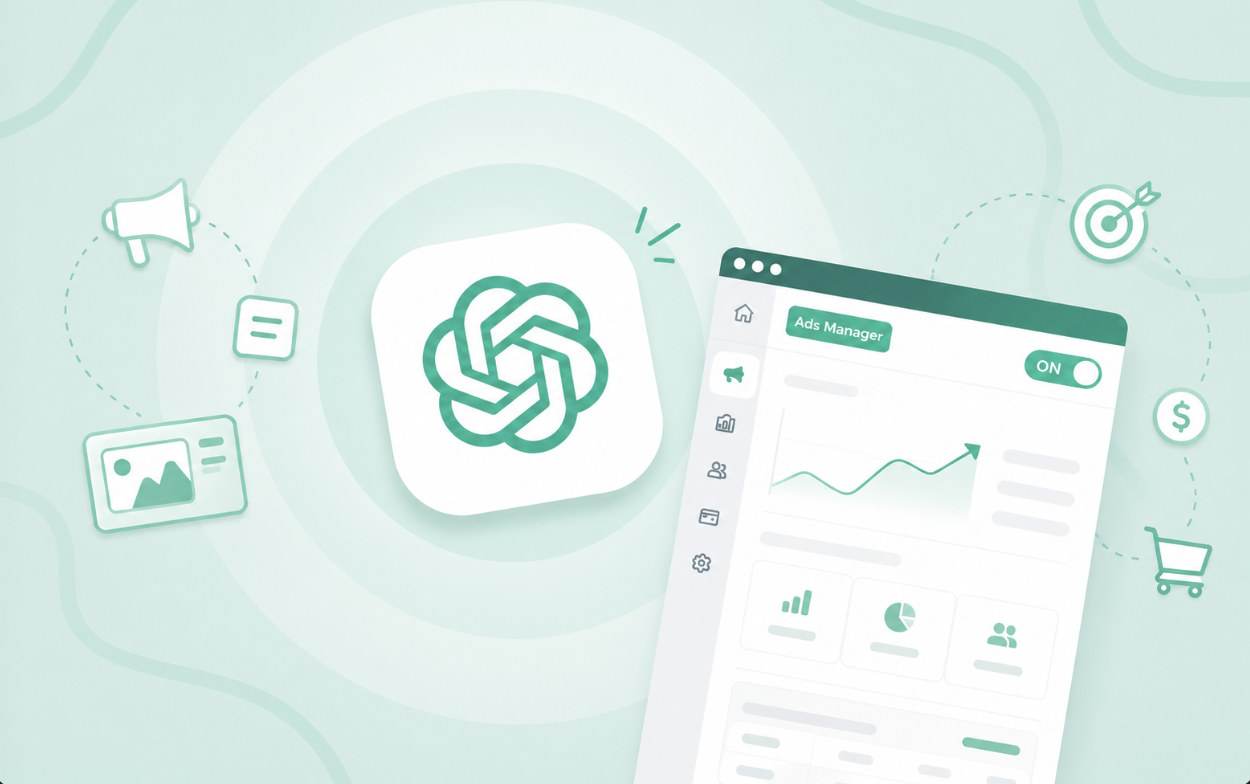
27 April 2026
ChatGPT Ads Self-Serve Is Live: What Advertisers Need to Know
OpenAI quietly launched a self-serve ads manager for ChatGPT in mid-April 2026 — and the digital advertising landscape just got a new player. The minimum spend dropped from $250,000 to $50,000, CPM rates fell from $60 to around $25 in just ten weeks, and a brand-new cost-per-click model is now on the table. With 900 million weekly active users and $100 million in annualized ad revenue reached within the first six weeks of the pilot, this is not a small experiment anymore.
Whether you’re already running campaigns on Google and Meta or exploring new channels to diversify your ad spend, here’s everything you need to know about ChatGPT ads right now — and how to think about them alongside your existing platforms.
What Changed: The Self-Serve Ads Manager Is Live
Until mid-April, advertising on ChatGPT required working directly with OpenAI or an agency partner, plus a commitment of $200,000 or more. That gated model kept the platform limited to enterprise brands like Target, Ford, Adobe, and Best Buy — over 600 advertisers in total during the managed pilot phase.
The self-serve ads manager changes the game in three ways. First, it drops the minimum commitment to $50,000. Second, it removes the agency requirement — you can now set up and manage campaigns directly. Third, it gives advertisers real-time access to impressions, clicks, and optimization controls for the first time. Early testers describe the interface as functionally similar to Google Ads.
On the pricing front, the shift has been dramatic. The launch CPM of $60 has softened to approximately $25 in many categories. OpenAI has also introduced a cost-per-click (CPC) bidding model with early bids ranging between $3 and $5 — a clear move to compete directly with Google and Meta for performance advertising budgets.
Ad Formats, Targeting, and Pricing: A Quick Breakdown
ChatGPT currently offers three ad formats:
Sponsored Answer Cards : Inline placements that appear below ChatGPT’s response, clearly labeled as sponsored. This is the primary format and reportedly outperforms the others.
Product Spotlight Units : Shopping carousels with pricing and checkout integration (Shopify and Etsy partnerships are already live), ideal for e-commerce advertisers.
Contextual Sidebar Placements : Persistent visibility alongside the conversation, better suited for brand awareness campaigns.
Only one ad unit appears per response, keeping the experience clean — a deliberate contrast to the ad clutter on many other platforms.
Targeting works differently than what you’re used to. There’s no keyword bidding in the traditional sense. Instead, ChatGPT matches ads to the context of the current conversation. If a user opts into personalization, past chat history and ad interactions can improve relevance. Think “context matching” rather than audience segments or interest-based targeting.
Ads appear only on the Free and Go tiers — Plus, Pro, Business, Enterprise, and Education subscribers see no ads. That still leaves a massive audience: roughly 85% of ChatGPT’s user base is on ad-eligible tiers.
How ChatGPT Ads Compare to Google and Meta
| ChatGPT Ads | Google Search Ads | Meta Ads | |
|---|---|---|---|
| Targeting | Conversation context + opt-in chat history | Keyword intent | Behavioral + demographic + interest |
| CPM Range | $18–$65 (trending toward $25) | $100–$1,000+ (effective CPM varies widely) | $5–$20 |
| CPC Range | $3–$5 (new CPC model) | $1–$50+ (varies by keyword) | $0.50–$3 |
| Intent Signal | High — users are actively problem-solving | High — active search intent | Lower — passive discovery |
| Measurement | Basic (impressions, clicks, new conversion pixel) | Mature (full attribution stack) | Mature (pixel, CAPI, offline events) |
| Platform Maturity | Early beta | 25+ years | 15+ years |
The key difference is intent quality. Someone asking ChatGPT “What’s the best email marketing tool for e-commerce?” is deeper in the decision-making process than a typical social media scroller. That’s why early adopters argue the $25 CPM may actually deliver strong value despite being higher than Meta’s rates.
But measurement is still the gap. ChatGPT’s reporting is limited compared to what Google and Meta offer. A conversion pixel is now available, but attribution tools are still catching up. If you’re used to granular ROAS tracking, set expectations accordingly.
What This Means for Multi-Platform Advertisers
If you’re running campaigns across multiple platforms, here’s the practical takeaway: ChatGPT ads are a “learn now, scale later” channel.
The advertisers who will benefit most are those already managing cross-platform campaigns and can add ChatGPT as a test channel without disrupting their core spend on Google and Meta. Start with a learning budget — $2,000 to $5,000 is enough to understand what works in a conversational ad context.
A few things to prepare now:
Rethink your ad copy : Traditional urgency-driven copy (“LIMITED TIME OFFER!”) doesn’t work in a conversational interface. Your ad needs to feel like a helpful recommendation, not a shout.
Build an intent map : List 30–50 prompts your ideal customers would type into ChatGPT. This becomes your targeting strategy.
Get your tracking ready : Set up clean UTM structures and conversion tracking now so you can measure properly once the tools mature.
Watch the international rollout : The pilot is expanding beyond the US to Canada, Australia, and New Zealand, with more markets planned throughout 2026.
Managing ads across Google, Meta, and TikTok is already complex — and ChatGPT entering the mix only raises the bar. The advertisers who already have a solid multi-platform foundation will be the ones best positioned to test new channels without losing control of their core campaigns. If you’re still building that foundation, platforms like Rockads can help you streamline your Google, Meta, and TikTok ad operations so you’re ready to experiment when the next opportunity — like ChatGPT ads — opens up.
The pattern is clear: every major ad platform started with managed, high-spend partnerships before opening self-serve access. Google did it. Meta did it. TikTok did it. OpenAI is following the same playbook at compressed speed. The window between now and when competition drives costs up is your preparation window — not a waiting room.
Frequently Asked Questions
Can small businesses advertise on ChatGPT now?
Not quite yet. The self-serve ads manager is currently available to a limited group of advertisers with a $50,000 minimum commitment. However, OpenAI is actively onboarding more advertisers, and the minimum is expected to drop further as the platform scales — similar to how Google and Meta opened up over time.
Do ChatGPT ads affect the AI’s responses?
No. OpenAI has stated that ads do not influence ChatGPT’s generated answers. Sponsored placements appear separately at the bottom of responses, clearly labeled, and run on completely separate systems from the AI model.
What is the minimum budget for ChatGPT ads in 2026?
The minimum commitment dropped from $250,000 to $50,000 with the self-serve launch in April 2026. CPM rates have also decreased from $60 at launch to around $25, and a new CPC model with bids between $3 and $5 is now available.
SHARE