 ENGLISH
 TÜRKÇE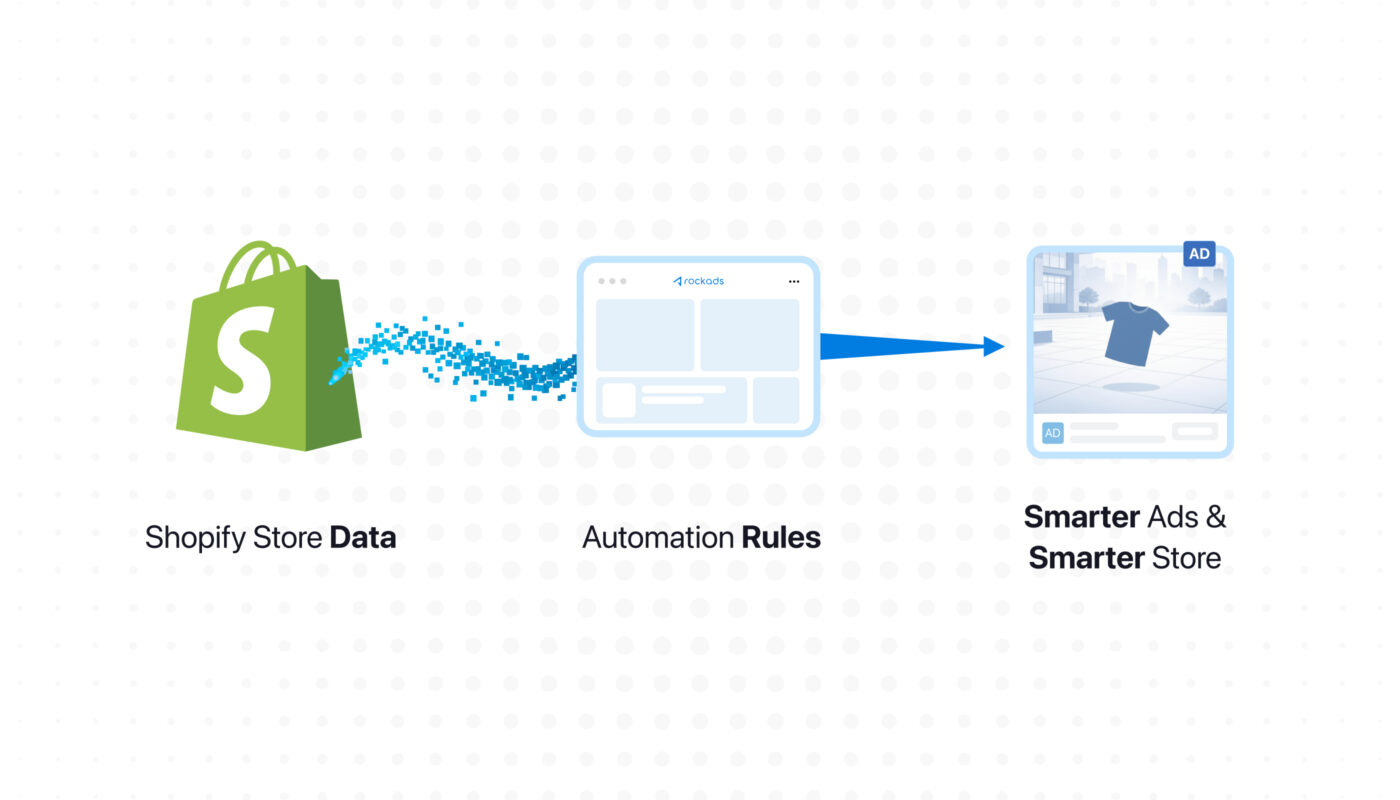
18 March 2026
Shopify + Ad Automation: How Store Data Can Make Your Ads Smarter
In performance marketing, most campaign decisions are based on ad platform metrics.
ROAS, CPA, CTR, conversion rate – these are the numbers advertisers watch every day.
But there’s a problem.
Ad platforms only see part of the picture.
They can tell you how an ad performs, but they don’t always understand what’s happening inside your store.
For example:
• A product suddenly goes out of stock
• A bestseller starts trending
• A product margin changes
• A new collection launches
These events happen inside your store, not inside the ad platform.
That’s why connecting your Shopify store data to your ad automation system can fundamentally change how campaigns are managed.
Instead of reacting manually, your advertising can start reacting automatically to what happens in your store.
Why Ad Metrics Alone Are Not Enough
Most advertisers optimize campaigns based on performance signals such as:
• cost per acquisition
• return on ad spend
• click-through rate
• conversion rate
While these metrics are essential, they often miss critical business context.
For example:
A campaign may show strong ROAS — but the product being promoted might be almost sold out.
Or an ad might be paused due to low performance, even though the product has very high profit margins.
Without store-level data, automation decisions can sometimes be incomplete.
This is where store integrations become powerful.
What Happens When You Connect Shopify to Ad Automations
By connecting a Shopify store to the Ad Automations system, advertisers can combine two powerful data sources:
-
Advertising performance data
-
Real-time store signals
This enables automation rules to react not only to campaign performance, but also to store activity.
Examples of store signals include:
• inventory levels
• product availability
• order volume
• product launches
• bestseller status
When these signals are integrated into automation rules, campaigns become significantly more intelligent.
Example: Automating Ads Based on Inventory
One of the most common challenges in e-commerce advertising is promoting products that suddenly go out of stock.
Without automation, this often requires manual monitoring.
With Shopify connected to Ad Automations, rules can react instantly.
Example rule:
If product inventory drops below a defined threshold → pause ads promoting that product.
This prevents:
• wasted ad spend
• poor customer experience
• frustrated shoppers clicking unavailable products.
Example: Automatically Scaling Bestselling Products
Another powerful use case is identifying products that start selling quickly.
Instead of waiting for a marketing team to notice the trend, automation can react immediately.
Example rule:
If a product becomes a bestseller in Shopify → increase budget for campaigns promoting that product.
This helps advertisers capture momentum faster.
In competitive markets, reacting quickly can make a significant difference in revenue.
Example: Launching Ads for New Products
Product launches are often time-sensitive.
With store-connected automation, campaigns can automatically activate when new products appear in the catalog.
Example rule:
If a new product is added to Shopify → activate launch campaigns automatically.
This ensures that marketing supports product launches without delays.
Why Store Signals Matter More in 2026
E-commerce advertising has become more complex.
Advertisers now manage:
• multiple campaigns
• dozens of creatives
• multiple platforms
• changing inventory
• dynamic product catalogs
Trying to manage all these variables manually is increasingly difficult.
The future of advertising is not just automation – it is context-aware automation.
Automation that understands what is happening inside your store.
How Rockads Helps Enable Store-Based Automation
Rockads supports advertisers as a performance partner while its Ad Automations system executes rule-based campaign logic.
By connecting Shopify stores, advertisers can build automation rules that respond to both:
• ad performance signals
• store activity signals
This creates a more complete decision framework for campaign management.
Instead of relying only on platform metrics, automation can incorporate real business signals such as inventory changes, best-selling products, or new product launches.
The result is advertising that is better aligned with the reality of the store.
Key Takeaways
• Ad platforms only see campaign performance, not store activity.
• Connecting Shopify allows automation rules to react to real store signals.
• Inventory, product launches, and bestseller data can improve campaign decisions.
• Store-connected automation reduces manual work and wasted spend.
• Combining advertising data with store signals leads to smarter campaign management.
SHARE