 ENGLISH
 TÜRKÇE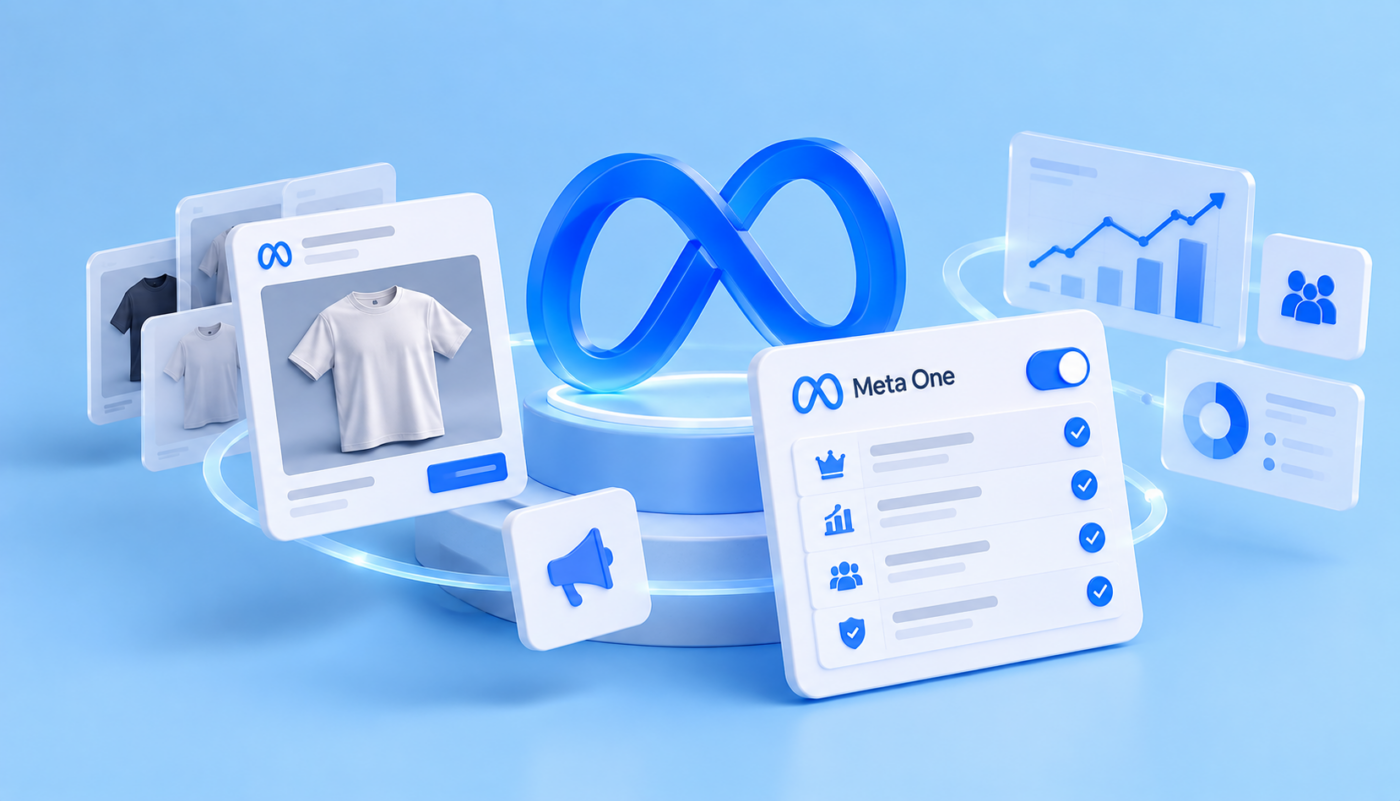
Meta One Explained: What Meta’s New Subscription Means for Advertisers
In September 2026, Meta launched Meta One, a paid subscription that runs across Facebook, Instagram, WhatsApp and Meta AI. Most of the early coverage focused on price points and consumer perks like custom fonts and AI image generation. For businesses already investing in Meta ads, the more useful question is narrower. Does the Meta One subscription change anything about how advertising on Meta works, and if not, where does it actually touch the advertising operation?
Quick answer
-
- Meta One is a subscription for extra AI usage, expression features and professional tools. The core Facebook, Instagram, WhatsApp and Meta AI experience stays free.
- Business plans start at $14.99 per month and add a verified badge, publishing and analytics tools, team access and more Meta Business Agent capacity.
- Meta’s announcement does not describe any change to ad buying, auctions or Ads Manager. For advertisers, Meta One is a decision about presence, messaging and team operations, not media.
What Is Meta One?
Meta One is Meta’s umbrella subscription service for its apps. Meta introduced it on September 15, 2026 as a service offering higher AI usage, enhanced expression features and professional tools for creators and businesses, rolling out gradually with more than 50 features and 15 million subscriptions and trials to date. Meta has been explicit that the subscription sits on top of the free product rather than replacing it: the core experience across its apps and Meta AI will stay free.
Meta One did not appear from nowhere. Earlier in 2026, Meta launched single product plans (Instagram Plus, Facebook Plus and WhatsApp Plus), and Meta One now adds Core and Premium bundles that combine those features with more usage of compute-intensive AI capabilities. The roadmap is also broader than today’s apps. Meta says it will expand the service to Edits, AI glasses and more over time.
Meta One Plans and Pricing at a Glance
Meta One has three layers: single app plans, bundles for individuals, and bundles for creators and businesses. Plans start at $2.99 a month for single products, $7.99 for individual bundles and $14.99 for creator and business bundles, and Meta notes that plans, benefits, pricing and availability may vary by region, app and account.
| Plan | Starting price | Built for | What stands out |
|---|---|---|---|
| WhatsApp Plus | $2.99/mo | Individuals | Themes, icons, special stickers, more pinned chats |
| Instagram Plus | $3.99/mo | Individuals | Custom DM and Story fonts, Story view alerts, DM previews |
| Facebook Plus | $3.99/mo | Individuals | Custom app icons, super hearts, more Reels insights |
| Core | $7.99/mo | Individuals and AI users | More Meta AI image and video generation, plus all three app plans |
| Premium | $19.99/mo | Heavy AI users | Everything in Core with the most creation capacity |
| Essential | from $14.99/mo | Creators and businesses | Verified badge, impersonation protection, more Business Agent access |
| Advanced | from $49.99/mo | Growing teams | Scheduling, links in posts, exportable analytics, team access |
| Expert / Max | from $149 / $499/mo | Teams at scale | Highest feature access and Business Agent capacity |
Prices are in USD as announced by Meta. Check the plans available to your own account before budgeting.
What the Business Plans Actually Include
The creator and business tiers are where Meta One becomes relevant to companies. They include an enhanced profile that showcases your website, locations and what people say about you, a bold follow button on reels, and follow invitations sent automatically to people who engage with your content. Every business tier also includes more access to Meta Business Agent, Meta’s AI agent for customer conversations. Meta announced the Business Agent globally at its Conversations event in London on June 3, 2026, as a native AI agent that handles customer conversations on WhatsApp, Messenger and Instagram.
The higher tiers are aimed at teams rather than individuals. The Advanced plan adds scheduling stories up to 30 days ahead, links in organic posts and reels, exportable analytics and deeper audience insights, and lets team members access the account without sharing a password. Expert and Max include the highest levels of feature access and Business Agent capacity for teams managing at scale. In practice, the ladder moves from “look credible” at Essential to “run the account like a team” at Advanced and above.
Does Meta One Change How Meta Ads Work?
Based on what Meta has published, no. The announcement frames Meta One around organic presence, AI usage and customer response. It does not describe changes to ad delivery, auction dynamics, targeting options or Ads Manager, and it does not make a subscription a condition for advertising. Until Meta documents otherwise, treat any claim that subscribing improves CPMs, reach or ad ranking with caution.
That distinction matters for budgeting. A Meta One plan is a software subscription, while your ad spend buys media. The two sit on different lines, get billed differently and answer different questions. Media spend determines who sees your ads. A business subscription shapes some of what happens around those ads: the profile people land on, how quickly conversations get answered and how your team works inside the account. For finance teams, that also means one more recurring cost to track alongside media spend, card and FX costs when calculating what advertising actually costs the business.
Verified Badge vs Business Verification: Not the Same Thing
The word “verified” now appears in several different places across Meta, and they are easy to confuse. The Essential plan includes a verified badge, a verified channel on the WhatsApp Business app and impersonation protection, pending successful verification. That badge is a customer-facing trust signal. It is separate from the verification processes that govern what a business can do in Meta’s advertising tools.
| Meta One verified badge | Business verification | Advertiser verification | |
|---|---|---|---|
| What it is | A subscription feature that displays a badge and adds impersonation protection | A check that confirms your legal business details in Meta’s business tools | An identity check tied to who is behind, or paying for, specific ads |
| Where it shows up | Your profile and WhatsApp channel | Business settings | Ad disclosures, the Ad Library and regulated categories |
| Tied to a subscription? | Yes, part of Meta One plans | No | No |
| Can it affect ad eligibility? | Not described that way by Meta | Can affect access to certain features | Can be required for certain categories and markets |
Advertiser verification requirements are also tightening market by market. In late August 2026, Meta announced that every advertiser running financial services ads targeting Poland must complete identity verification. The practical takeaway is simple: paying for a badge will not satisfy a verification requirement in your ad account, and an ad account verification will not give your profile a badge.
Where Meta One Touches the Advertising Operation
Meta One does not sit inside your campaigns, but it does sit next to them. A useful way to see it is to follow what happens after someone engages with an ad.
The profile visit after the ad
Many people check a brand’s profile before they buy, especially when the brand is new to them. An enhanced profile that surfaces your website, locations and customer sentiment, combined with a verified badge, can make that moment more reassuring. Meta has not published data showing a performance impact, so the value here is about credibility at the point of consideration rather than a measurable change in campaign metrics.
The conversation after a click-to-message ad
Click-to-message ads send people who tap your ad directly into a conversation with your business on Messenger, Instagram or WhatsApp. Those conversations only convert if someone, or something, answers. If your team runs meaningful volume through click-to-message campaigns, Business Agent capacity becomes an operational question: can you respond at the speed your ad spend is creating conversations? Replies generated by AI still need guardrails, handover rules and regular review, and messaging costs on WhatsApp are billed separately from any subscription.
The team behind the account
Account access is an unglamorous but real risk area. Sharing passwords between marketers, freelancers and agencies creates security gaps and makes it hard to see who changed what. Team access without password sharing on the Advanced plan is a small feature with a meaningful operational upside, particularly for brands that coordinate organic posts, story schedules and paid launches across several people.
Is a Meta One Business Plan Worth It for Your Team?
For most advertisers, the answer depends less on ad performance and more on how your customers and your team behave. A few questions help clarify it:
- Do customers visit your profile before buying? If so, the enhanced profile and badge address a real moment in the journey.
- How much volume comes through click-to-message ads? High volume with slow response times makes Business Agent capacity worth evaluating.
- Is impersonation a problem for your brand? Fake accounts in comments and DMs are a trust issue that protection features are designed for.
- How many people touch the account? Team access matters more as agencies, freelancers and in-house teams multiply.
- Would exportable analytics replace something you already pay for? If not, it is an additional cost rather than a consolidation.
If most answers are no, Meta One is unlikely to change much for your advertising. Campaign performance on Meta still depends on the same fundamentals: strong creative, clean conversion signals, reliable account and payment operations, and consistent inputs for the algorithm to learn from. A sensible approach is to start with the lowest tier that solves a specific problem and review it after a full billing cycle.
The Bottom Line for Advertisers
Meta One is Meta’s clearest move yet toward selling tools around its apps, not just the attention inside them. For advertisers, it is best understood as an optional layer for presence, messaging and team operations. It does not replace media spend, it is not the same as business or advertiser verification, and Meta has not presented it as a lever for ad performance.
What it does show is that the work surrounding a campaign keeps growing: profiles, conversations, permissions, verification and costs that sit outside Ads Manager. Rockads is built around that operational layer, helping advertisers manage advertising platform access, payment operations, compliance processes and visibility as their Meta advertising scales. The media still does the reaching, and the operation around it increasingly decides how much of that reach turns into results.
Frequently Asked Questions
What is Meta One?
Meta One is a paid subscription across Facebook, Instagram, WhatsApp and Meta AI, launched in September 2026. It offers more AI usage, expression features and professional tools, while the core apps remain free.
How much does Meta One cost?
Single app plans start at $2.99 per month, individual bundles at $7.99 and creator and business bundles at $14.99. Business tiers go up to Max, which starts at $499 per month, and pricing can vary by region and account.
Does Meta One improve ad performance or lower ad costs?
Meta has not described Meta One as affecting ad delivery, auctions or costs. Treat it as a subscription for presence, messaging and team tools rather than a performance lever for campaigns.
Is the Meta One verified badge the same as business verification?
No. The badge is a profile-level trust signal that comes with Meta One plans, while business and advertiser verification are separate processes in Meta’s business tools that can affect access to features and certain ad categories.
Do I need Meta One to run ads on Facebook and Instagram?
No. Meta’s announcement does not make a subscription a requirement for advertising, and campaigns continue to run through Ads Manager as before.
SHARE